Traditional Timber Sash Windows
From early Georgian 6-over-6 pane configurations to grand Victorian 2-over-2 sashes with decorative horns. How slim sealed units preserve the delicate lines of British sash architecture.
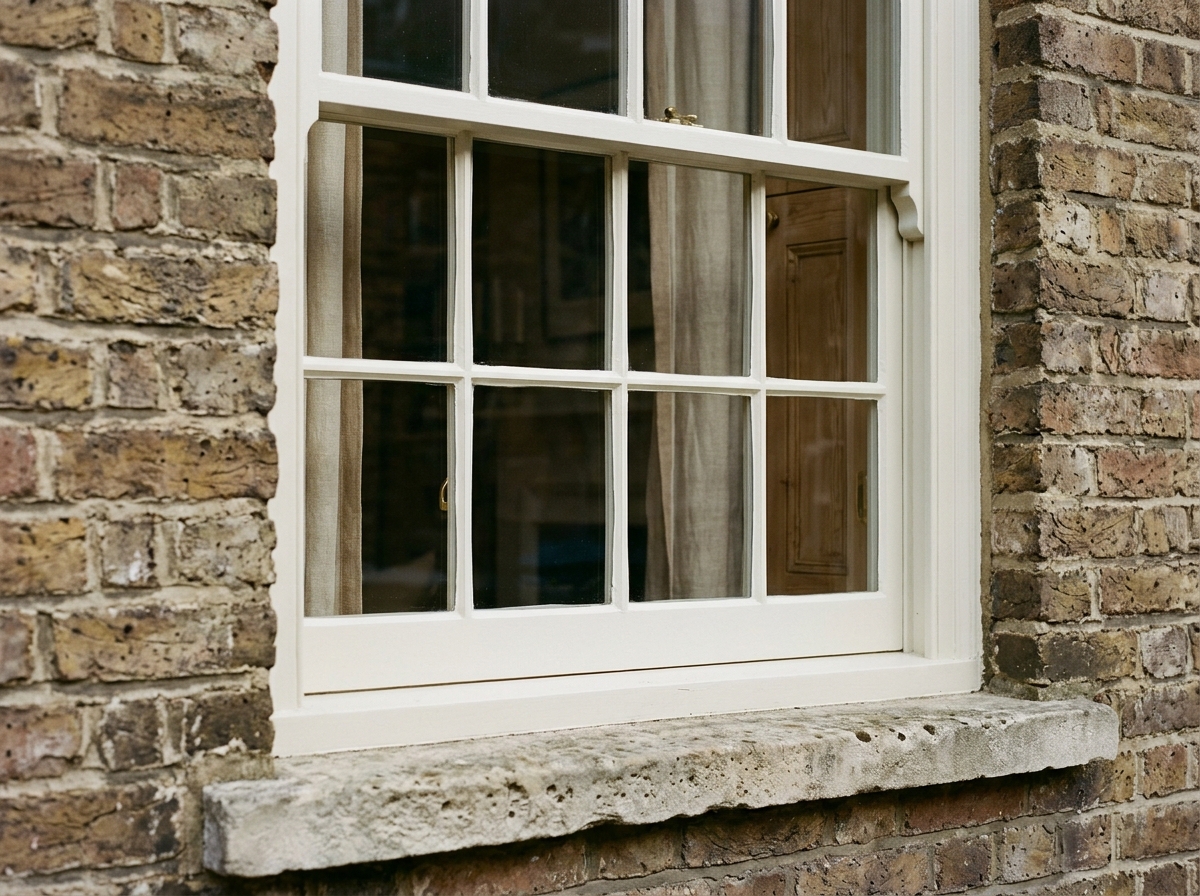
The Physics of Upgrading Historic Sash Joinery
Traditional timber sashes operate using a counterbalanced suspension system: cast-iron or lead sash weights connected via braided cord or chain running over brass pulleys into internal timber sash boxes.
When upgrading from single glass (approx. 7.5–10 kg/m²) to modern standard 24mm double glazing (approx. 20–25 kg/m²), the sash weights must more than double, often requiring irreversible routing of historic sash boxes or leading to cord failure.
Slim heritage sealed units (combining 4mm Low-E with 3mm, 4mm, or 4.5mm outer panes) weigh substantially less, enabling original timber frames to be retained and counterweights adjusted gently without destroying original timber boxes.
Rebate Depth & Putty Point Clearance
Historic sashes typically feature rebates between 7mm and 10mm deep.
- Sightline Concealment: A 5.5mm or 7mm perimeter sightline allows the spacer bar to sit below the timber rebate shoulder, concealed entirely by traditional linseed putty or slender timber glazing beads.
- Glazing Compounds: Traditional linseed oil putty can cause failure of organic sealed unit perimeter seals. Specialist heritage butyl elastomeric compounds or neutral-cure silicones with timber beads must be used as recommended by your window specialist.
Configure Sash Units
Input multiple sash rows for top and bottom sashes across your project.